Process Linux
Linux is a process, not a product, says Debian founder Ian Murdock.
Saturday, July 26, 2003
Cantenna
An Antenna made out of a tin can, this geeky stuff is practical to build. I'm constructing one, with the help of some info:
- orig diagram
- a good guide
- a "how to" guide
An Antenna made out of a tin can, this geeky stuff is practical to build. I'm constructing one, with the help of some info:
- orig diagram
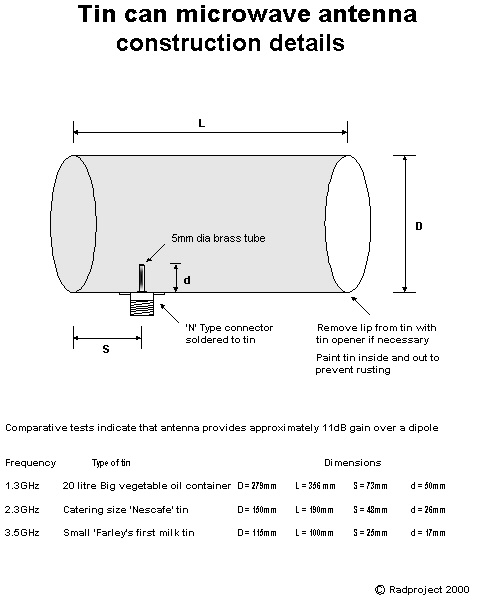
- a good guide
- a "how to" guide
Friday, July 25, 2003
Porn Gore
Just when I thought I knew pornography, this Guardian reportage on the rough trade came. Pop Quiz: what's the diff between a feature and a gonzo? Read on...
Just when I thought I knew pornography, this Guardian reportage on the rough trade came. Pop Quiz: what's the diff between a feature and a gonzo? Read on...
Tuesday, July 08, 2003
Technological Gobbledygook
is a definite turn-off. Here's a BBC report on how new technology jargons have inhibited some people from reaping the benefits and wasted advertising money.
is a definite turn-off. Here's a BBC report on how new technology jargons have inhibited some people from reaping the benefits and wasted advertising money.
The Tragedy of the Anti-Common
The New Yorker writes about how America has "always had a vibrant patent system," and "managed to strike a balance between the need to encourage innovation and the need to foster competition." "In the past decade, the balance has been upset," says the writer James Surowiecki in an article. "The scope of patents has been expanded, copyrights have been extended, trademarks have been subjected to bizarre interpretations." Such is the tragedy of the anti-common.
The New Yorker writes about how America has "always had a vibrant patent system," and "managed to strike a balance between the need to encourage innovation and the need to foster competition." "In the past decade, the balance has been upset," says the writer James Surowiecki in an article. "The scope of patents has been expanded, copyrights have been extended, trademarks have been subjected to bizarre interpretations." Such is the tragedy of the anti-common.
Monday, July 07, 2003
Computing Power On Demand
I have yet to get my hands dirty on Beowulf. Notably, distibuted computing (Beowulf's an example) is the next wave of cheap supercomputing. Case in point: SETI@Home. It's the world's fastest distributed computing, and--best of all--it's freely provided for by millions of people with extra CPU power and time. "Put the computation near the data," thus urges this Microsoft research guy in his article on the economics of distributed computing.
[ more from IEEE Task Force on Cluster Computing ]
I have yet to get my hands dirty on Beowulf. Notably, distibuted computing (Beowulf's an example) is the next wave of cheap supercomputing. Case in point: SETI@Home. It's the world's fastest distributed computing, and--best of all--it's freely provided for by millions of people with extra CPU power and time. "Put the computation near the data," thus urges this Microsoft research guy in his article on the economics of distributed computing.
File Swapping Rules (or Not)!
Even threats of lawsuits couldn't stop filesharing. Stats shows that after RIAA announced its strategy to sue people sharing copyrighted music files, online file swappers increased in number. This is contradicted by a news article from CNN saying it actually decreased.
On its flip side, P2P is seen in the future as an instrument of freedom, passing news and information beyond the reach of censors.
Even threats of lawsuits couldn't stop filesharing. Stats shows that after RIAA announced its strategy to sue people sharing copyrighted music files, online file swappers increased in number. This is contradicted by a news article from CNN saying it actually decreased.
On its flip side, P2P is seen in the future as an instrument of freedom, passing news and information beyond the reach of censors.
Saturday, July 05, 2003
Future of Open Source
Divining the future isn't exactly my cup of tea. But this interview Tim O'Reilly got me thinking about what I've been doing along IT lines. Tim predicts EBay will buy up Oracle, as Open Source lincenses don't work.
On the other hand, while OS licensing doesn't work, OS software development model just might. Linus compares it to biological diversity. Micro$oft is likened to a shark... or a turtle:
"You have the Linux approach that is fairly diverse and all over the map. Maybe it is not very efficient. But it works very well in the face of complexity and changing circumstances. Changing circumstances will really show that part of that diversity really works. Biology on the other extreme is a very mono culture, which works very well as long as the circumstances stay the same. To some degree they are seen as very efficient and they can live on for a long time. A perfect case in genetics is sharks. They are very stable but they also don't evolve anymore. That works, but if you want to go past a certain point, it's a problem."
Divining the future isn't exactly my cup of tea. But this interview Tim O'Reilly got me thinking about what I've been doing along IT lines. Tim predicts EBay will buy up Oracle, as Open Source lincenses don't work.
On the other hand, while OS licensing doesn't work, OS software development model just might. Linus compares it to biological diversity. Micro$oft is likened to a shark... or a turtle:
"You have the Linux approach that is fairly diverse and all over the map. Maybe it is not very efficient. But it works very well in the face of complexity and changing circumstances. Changing circumstances will really show that part of that diversity really works. Biology on the other extreme is a very mono culture, which works very well as long as the circumstances stay the same. To some degree they are seen as very efficient and they can live on for a long time. A perfect case in genetics is sharks. They are very stable but they also don't evolve anymore. That works, but if you want to go past a certain point, it's a problem."
Friday, July 04, 2003
Vitamins, Anyone?
There's little evidence to support the use of vitamin supplements (like the anti-oxidants A, C, & E) to prevent cancer or heart disease, says this report from the U.S. Preventive Services Task Force.
There's little evidence to support the use of vitamin supplements (like the anti-oxidants A, C, & E) to prevent cancer or heart disease, says this report from the U.S. Preventive Services Task Force.
Tuesday, July 01, 2003
Tuesday, June 17, 2003
Technology Without A Cause
This essay in the Guardian reminds us of technology's downside (if not downright meaninglessness):
[IF...,] "one of technology's ends is to reduce our lives to such blob-like stasis that we hardly ever have to interact with other human beings. Another is to distract us from the shame we feel about our decadent lifestyles. Our response to being bored and rich is not to discard our possessions and live more simply, but to buy more stuff to reduce the space in which we might contemplate our shame."
And while Nokia boasts of connecting people, it does so with people discussing what their cellfons can do rather than what they REALLY DO WITH the technology. Too much technology can even compromise personal relationship.
This essay in the Guardian reminds us of technology's downside (if not downright meaninglessness):
[IF...,] "one of technology's ends is to reduce our lives to such blob-like stasis that we hardly ever have to interact with other human beings. Another is to distract us from the shame we feel about our decadent lifestyles. Our response to being bored and rich is not to discard our possessions and live more simply, but to buy more stuff to reduce the space in which we might contemplate our shame."
And while Nokia boasts of connecting people, it does so with people discussing what their cellfons can do rather than what they REALLY DO WITH the technology. Too much technology can even compromise personal relationship.
Technology Evangelism
A sort of a zealous follow-through of Information Rules, Tech Evangelism examines how Micro$oft could churn out technology that becomes an industry standard. As the book puts it, "Evangelism is war," and Micro$oft appears to be the victor--for now.
A sort of a zealous follow-through of Information Rules, Tech Evangelism examines how Micro$oft could churn out technology that becomes an industry standard. As the book puts it, "Evangelism is war," and Micro$oft appears to be the victor--for now.
Tuesday, June 10, 2003
Saturday, June 07, 2003
Good Ol' Adam
Notes on the range of intellectual sensibilities of Adam Smith, as exemplified by his two books:
The Theory of the Moral Sentiments (1759). Part II: Of Merit and Demerit; or, of the Objects of Reward and Punishment Consisting of Three Parts, Section II: Of Justice and Beneficence:
-Chap. I: Comparison of those two virtues: "the violation of justice is injury"
- Chapter III: Of the utility of this constitution of Nature: "All the members of human society stand in need of each others assistance, and are likewise exposed to mutual injuries. Where the necessary assistance is reciprocally afforded from love, from gratitude, from friendship, and esteem, the society flourishes and is happy. All the different members of it are bound together by the agreeable bands of love and affection, and are, as it were, drawn to one common centre of mutual good offices."
An Inquiry into the Nature and Causes of the Wealth of Nations, (1776) The Modern Library edition, New York, 1937:
-"It is not from the benevolence of the butcher, the brewer and the baker, that we expect our dinner, but from their regard to their own interest. We address ourselves, not to their humanity, but to their self-love, and never talk to them of our necessities but of their advantages" (p. 14).
Notes on the range of intellectual sensibilities of Adam Smith, as exemplified by his two books:
The Theory of the Moral Sentiments (1759). Part II: Of Merit and Demerit; or, of the Objects of Reward and Punishment Consisting of Three Parts, Section II: Of Justice and Beneficence:
-Chap. I: Comparison of those two virtues: "the violation of justice is injury"
- Chapter III: Of the utility of this constitution of Nature: "All the members of human society stand in need of each others assistance, and are likewise exposed to mutual injuries. Where the necessary assistance is reciprocally afforded from love, from gratitude, from friendship, and esteem, the society flourishes and is happy. All the different members of it are bound together by the agreeable bands of love and affection, and are, as it were, drawn to one common centre of mutual good offices."
An Inquiry into the Nature and Causes of the Wealth of Nations, (1776) The Modern Library edition, New York, 1937:
-"It is not from the benevolence of the butcher, the brewer and the baker, that we expect our dinner, but from their regard to their own interest. We address ourselves, not to their humanity, but to their self-love, and never talk to them of our necessities but of their advantages" (p. 14).
Wednesday, June 04, 2003
Globalization blues
I thought I never have to blog anything on this topic, apart from my school assignment. But the temptation of a good site, like Yale's, is hard to resist. YaleGlobal is Online Magazine is a goldmine of info relating to globalization.
I thought I never have to blog anything on this topic, apart from my school assignment. But the temptation of a good site, like Yale's, is hard to resist. YaleGlobal is Online Magazine is a goldmine of info relating to globalization.
Friday, May 30, 2003
Indian Take
"Take on Gates!," an Indian president tells techies at the Indian Institute of Information Technology. Here's the text of his speech where he also outlines his vision of technological convergencies as well their uses to power rural life.
"Take on Gates!," an Indian president tells techies at the Indian Institute of Information Technology. Here's the text of his speech where he also outlines his vision of technological convergencies as well their uses to power rural life.
Txting in America
is relatively new, but Americans are catching up. By 2007, there will be as many as 75 million American SMS users. Hmm... better remind them that txting hurts. :)
is relatively new, but Americans are catching up. By 2007, there will be as many as 75 million American SMS users. Hmm... better remind them that txting hurts. :)
Subscribe to:
Posts (Atom)